

Why Activewear Requires Specialized Sewing Machinery.
Mar 30, 2026
Leave a message
The Core Challenge: High-Stretch Fabric Behavior
Activewear fabrics typically contain:
15–25% spandex
4-way stretch structure
GSM range: 200–300
These fabrics behave differently during sewing:
They stretch under needle pressure
They shrink back after stitching
They are sensitive to heat and tension
Standard machines cannot control these variables.
Result:
Wavy seams
Puckering
Thread breakage
Why Standard Garment Factories Fail in Activewear
Most traditional factories are optimized for:
Woven fabrics
Low-stretch knits
Basic apparel construction
Their limitations:
Machine Limitations
No differential feed control
No flatlock capability
Limited elastic stitching options
Why Standard Garment Factories Fail in Activewear
Most traditional factories are optimized for:
Woven fabrics
Low-stretch knits
Basic apparel construction
Their limitations:
Machine Limitations
No differential feed control
No flatlock capability
Limited elastic stitching options
Operator Skill Gap
No experience handling stretch fabrics
Incorrect thread tension settings
Inconsistent seam quality
Process Control Issues
No fabric relaxation before cutting
No shrinkage rate testing
No stretch recovery validation
These gaps lead to unstable production quality.
Key Specialized Machines for Activewear Production
Activewear factories require dedicated machinery.
Below are the core machines used in professional production lines.
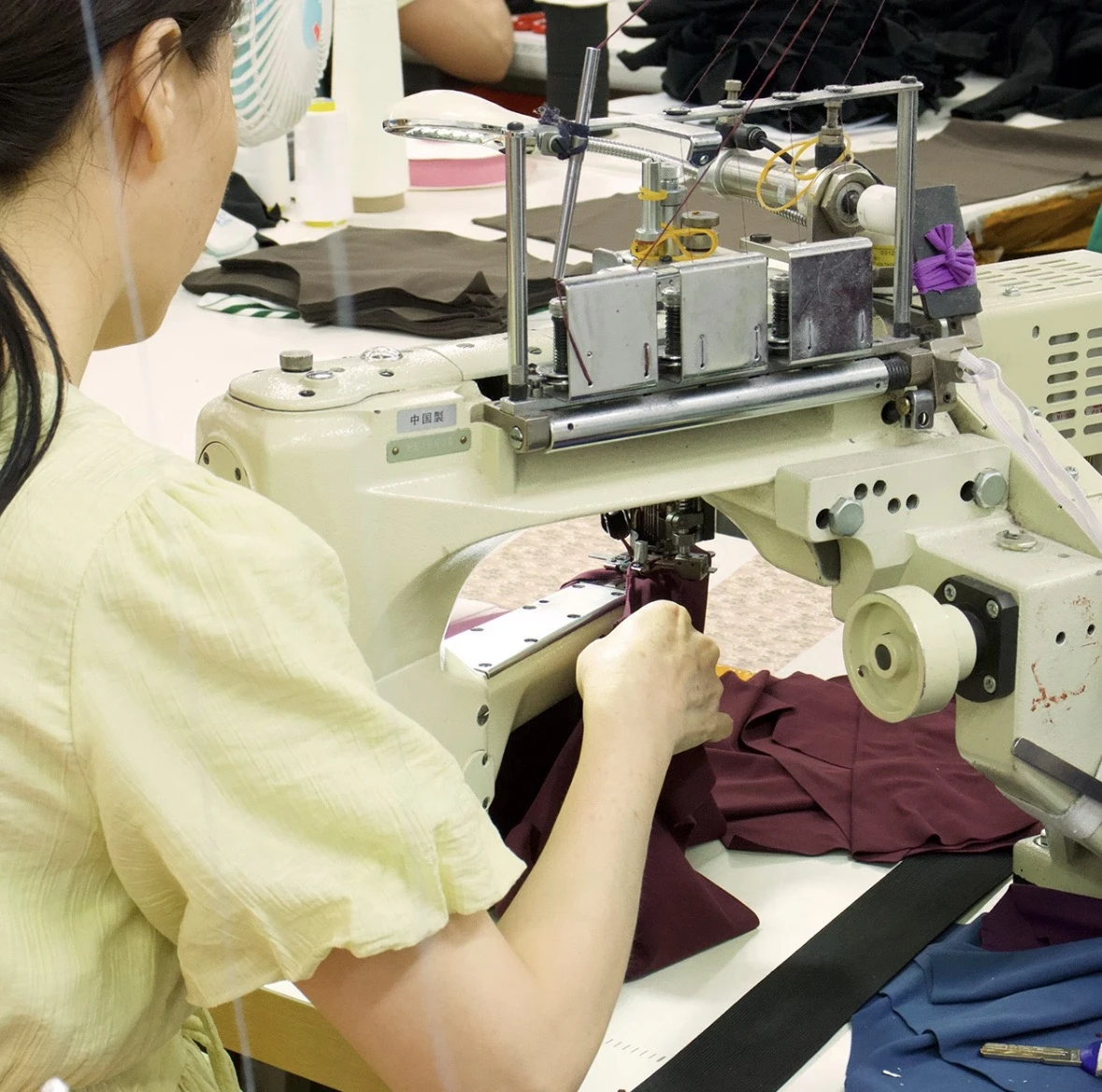
Flatlock Machine (4-Needle 6-Thread)
This is the most critical machine for yoga wear.
Function
Creates flat seams with minimal bulk
Allows fabric to stretch without breaking
Application
Leggings side seams
Yoga tops
Sports bras
Technical Advantage
Seam stretches with fabric
Reduces friction against skin
Prevents seam cracking
Without flatlock stitching, leggings will fail under tension.
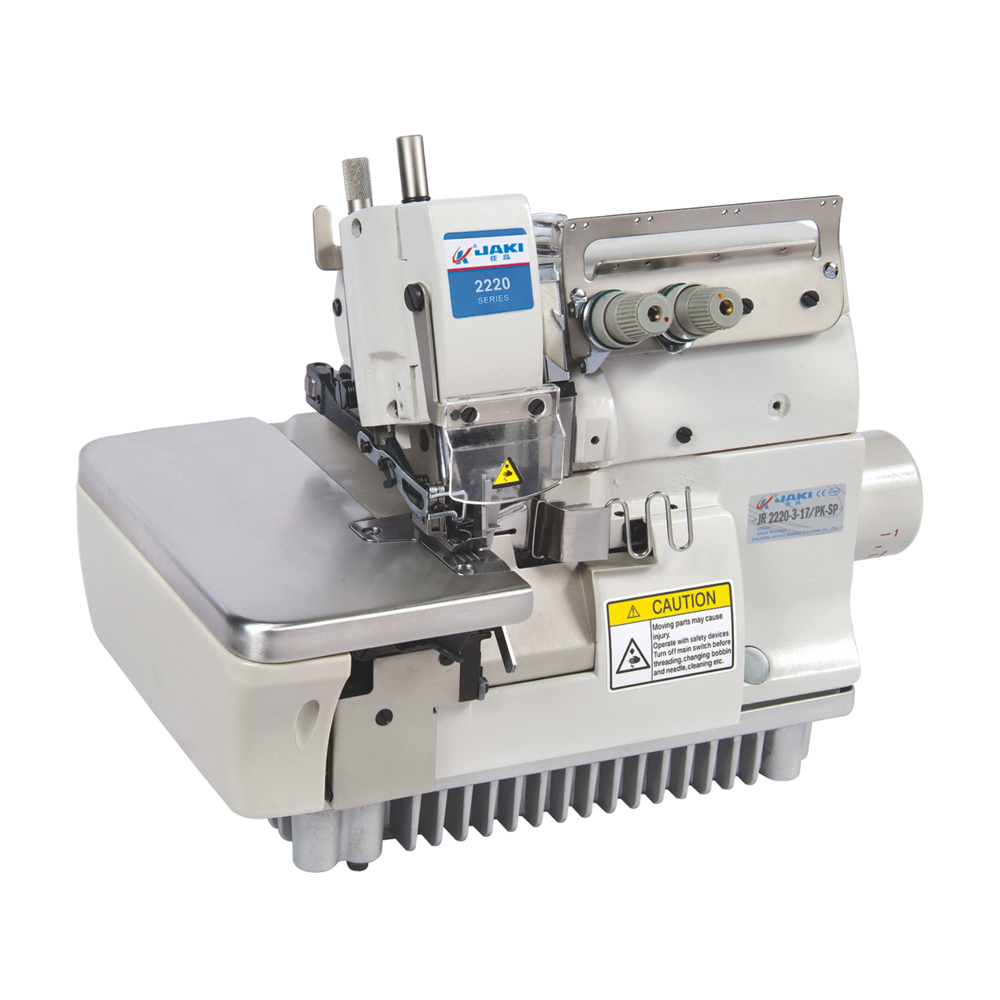
Overlock Machine with Differential Feed
Overlock machines are standard, but for activewear, they must include differential feed control.
Function
Balances fabric feeding speed
Prevents stretching or gathering during sewing
Why It Matters
High-stretch fabrics deform easily.
Without differential feed:
Seams become wavy
Fabric loses shape
Coverstitch Machine
Used for hemming and finishing.
Function
Creates stretchable hems
Provides clean finish
Application
Leggings hems
Waistbands
Armholes
Performance Benefit
Maintains elasticity
Prevents hem breakage
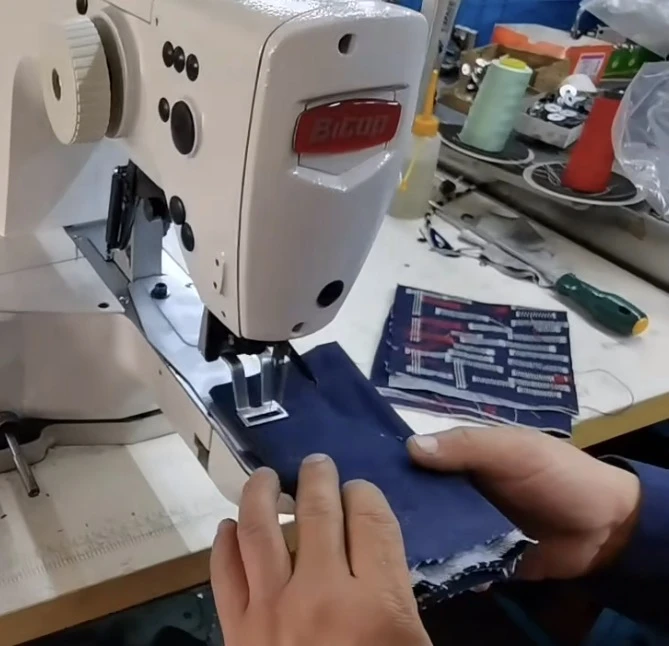
Bartack Machine
Used for reinforcement.
Function
Strengthens stress points
Application
Strap attachment (sports bras)
Pocket openings
Elastic joints
Why It Matters
Activewear undergoes repeated stress.
Weak reinforcement leads to product failure.

Elastic Attaching Machine
Specialized for waistband and elastic insertion.
Function
Controls elastic tension during sewing
Result
Even stretch distribution
Consistent waistband performance
Bonding and Seamless Machines (Advanced)
Used in premium activewear.
Function
Heat bonding instead of stitching
Seamless construction
Benefits
Reduced bulk
Clean aesthetic
Improved comfort
Higher cost and MOQ requirements.
Machine Comparison Table
| Machine Type | Function | Cost Impact | Durability | MOQ Impact |
| Standard Lockstitch | Basic stitching | Low | Low | Low |
| Flatlock Machine | Stretch seams | Medium | High | Medium |
| Differential Overlock | Fabric control | Medium | High | Medium |
| Coverstitch | Hem finishing | Medium | High | Medium |
| Bonding Machine | Seamless finish | High | Cery High | High |
Factories without these machines cannot produce consistent activewear quality.
Impact on Seam Performance
Seam quality defines product durability.
Key metrics:
Seam elongation capacity
Thread recovery
Seam strength
At Reely Apparel, we test:
Stretch to 150–180%
Seam recovery after multiple cycles
Target:
No seam cracking
No thread breakage
Thread Selection and Machine Calibration
Machines alone are not enough.
Thread must match fabric elasticity.
We use:
Polyester textured thread
Nylon stretch thread
Machine calibration includes:
Needle type selection
Thread tension control
Stitch density adjustment
Incorrect setup leads to:
Skipped stitches
Fabric damage
Fabric Handling and Pre-Sewing Control
Activewear production starts before sewing.
Fabric Relaxation
Fabric must rest before cutting.
Purpose:
Release tension from knitting
Stabilize dimensions
Shrinkage Rate Testing
Target:
Shrinkage rate ≤ 3%
Uncontrolled shrinkage leads to size inconsistency.
GSM Verification
Ensures fabric consistency across batches.
Quality Control Under AQL 2.5
Activewear requires strict inspection.
At Reely Apparel, we apply AQL 2.5 standards.
Inline Inspection
Seam alignment
Stitch consistency
Elastic attachment
Final Inspection
Measurement tolerance
Stretch performance
Visual quality
Performance Testing
Seam stretch test
Fabric recovery test
Color Fastness ≥ Grade 4
FOB Cost and Production Efficiency
Specialized machinery increases initial factory investment.
However, it reduces:
Defect rates
Rework costs
Production delays
FOB impact:
Slightly higher manufacturing cost
Significantly lower long-term quality risk
For buyers, this means:
More consistent bulk orders
Fewer quality claims
Lead Time Considerations
Specialized production lines improve efficiency.
Typical Lead Time:
Sampling: 7–10 days
Bulk production: 25–35 days
Factories without proper machines often face delays due to rework.
Why Machine Capability Defines Factory Qualification
Any factory can produce samples.
Only specialized factories can deliver consistent bulk production.
When evaluating suppliers, ask:
Do they use flatlock machines?
Do they control differential feed?
Do they perform seam stretch testing?
If the answer is no, the risk is high.
Work With a Factory Built for Activewear Production
At Reely Apparel, activewear production is built on specialized machinery and controlled processes.
We provide:
Full range of activewear sewing machines
Fabric control based on GSM and stretch performance
Seam engineering for durability
Testing for Color Fastness and shrinkage rate
Production under AQL 2.5 standards
Transparent MOQ and Lead Time planning
We do not adapt standard lines for activewear. We build dedicated lines for it.
Submit Your Activewear Tech Pack for Evaluation
If you are developing a yoga or activewear line:
Send your Tech Pack for production feasibility review
Request seam samples (flatlock, coverstitch, bonded)
Evaluate fabric and stitching performance before bulk production
Get a detailed FOB quotation
Contact Reely Apparel today to work with a factory equipped to handle high-performance activewear at scale.